It was during those times, when the Lushai Hills first came under the occupation of British East India Company. It was at that time dominated by Mizo/Lushai clans with powerful chiefs, frequently in clash with rivals to gain territory or to exact revenge, with headhunting of the defeated tribal chief and their clan as proof of their prowess.They frequently entered the populace of tea gardens and other villages for loot and carnage, areas under control of British East India Company.The raid of Katlichhera and Alexandrapur by Sailam Chief Bengkhuaia had a tremendous influence on the lives and future of the Lushai people. James Winchester, the tea owner of Alexandrapur, was killed, and the Mizos kidnapped his daughter Mary Winchester(Mizo:Zoluti).The British retaliated by organising an expedition to rescue the hostages. The owner’s daughter and other hostages were saved in the said expedition. Thereafter, though there was a temporary lull in the raids by Lushai Chiefs for some years, they soon resumed loot and carnage of British occupied territories. Such frequent raids compelled the British to mount the Chin-Lushai Expedition of 1889 and thus to bring the territories of Lushai Hills under British occupation.The fiercely independent Tribal Chiefs were now required to follow the diktats of the British authorities, which became a direct challenge to their free and savage mindset, and skirmishes occurred from time to time whenever they found an opportunity to corner the British rulers. It was one such incident that happened in a remote Township more than hundred miles south of Capital Aizwal………..
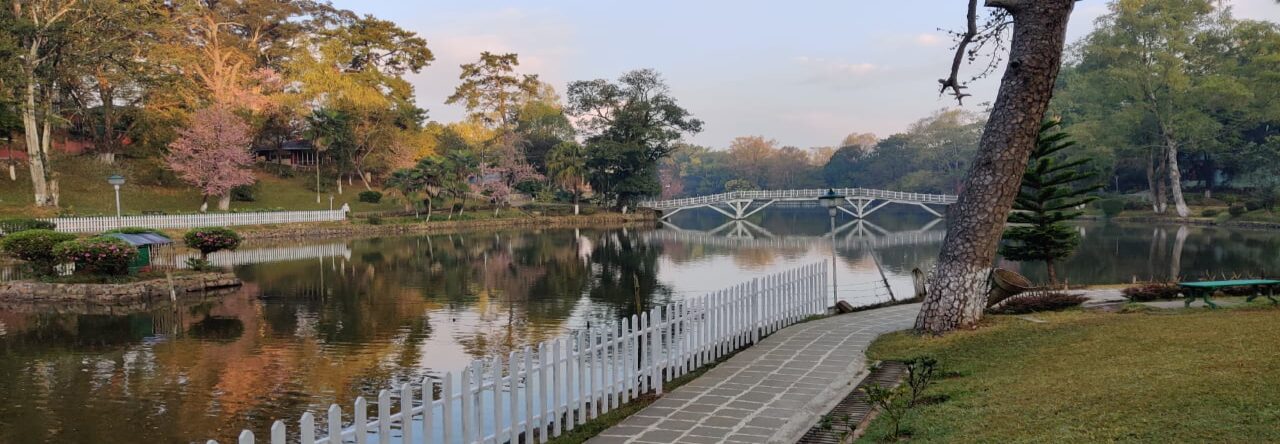
As the British embarked on transforming the place into a township for administrative purposes, they were confronted with a mountainous region surrounded with rolling hills, remote villages dotting far and wide, narrow winding pathways zigzagging in complex shapes crisscrossing the habitations among the wild virgin forests. Select villages, seemingly identical, owed allegiance to Lushai chiefs of individual clans, difference known only to the locals.

The task at hand for the British Superintendent, to bring the Lushai Chiefs of different clans and their subjects under control and subjugation and compel them to perform labour work as coolies was a gargantuan one at the very least. The Lushai Chiefs, all of whom ruled villages of various hilly regions far and wide, were summoned and explained the process they must follow henceforth. An agreement was executed with the Chiefs, called the ‘Ramlilekha’ or the ‘Boundery paper’ which solidified the Lushai Chiefs loyalty and obligation to the British Superintendent.The agreement included, among others, imposing a fixed amount of house tax (Chhiah) that every household was bound to pay, in cash or kind, every year. Other methods included compelling the Chiefs to pay a portion of the taxes that the villagers paid to them as their subjects, which were 1-3 baskets of paddy(Fathang,chief’s dues), the Sa chhiah(meat tax, ie a portion of the meat of wild animals ), Khuai chhiah(bee tax, ie a portion of honey collected) and Sangha chhiah(fish tax, ie a portion of the fish collected by villagers).Most importantly, a compulsory system of forced labour was imposed by the British officer whereby the Chiefs were made responsible for providing labour ( locally termed Kuli or coolie) on demand to construct roads, buildings and for transporting goods etc.Refusal to obey orders for forced labour or non payment of taxes invited severe punishment such as burning of villages and killing of livestock as well as deposition of the revolting chiefs from their chiefdom, also either deporting them or putting them in jail. The British officer in charge was very harsh and cruel in his dealings with the chiefs, and even resorted to beating with canes the disobedient coolies that the chiefs most reluctantly provided. He insisted that among the coolies, young Lushai damsels would have to be provided to do household works at the army barracks and in the officer’s quarters.

One such Lushai young woman, who also happened to be the betrothed of the son of the Lushai chief was assigned tasks at the private quarters of the Superintendent. On a particular evening, the officer, heavily intoxicated, attempted to violate her sanctity. The robust young lushai girl resisted violently, inflicting severe bodily injuries on the officer,thereby saving herself,. Enraged, the British officer ordered his subordinates to tie her up, and flogged her bare buttocks repeatedly with a cane. She was thereafter kept locked in a room for the whole night and left to nurse upon herself. Badly bruised and in severe pain and outraged at the violation of her modesty, she narrated the incident to her fiance and her kith and kin the next day.The whole village literally burst with anger like an incendiary bomb, and immediately gathered with archaic weapons to launch a frontal attack on the British quarters.The chief, a wise and elderly person, years of experience behind him, restrained the angry mob, explained the futility of frontal attack, which would only cause a complete wipe out by a far better and well equipped British army. Though angry and fuming to take revenge, they were also very loyal and respectful to the Chief, to defy the Chiefs diktat was unthinkable. They respectfully obeyed, certain that the Chief would not let them bear the insult, and they held their patience. The Chief’s son, the fiancee of the victim girl, vowed to take revenge by beheading the wicked Angrejee molester,and until then he would postpone his marriage. The Chief hatched a very different and vicious plan, only revealing the details to his very close associates, who were sworn to secrecy, lest the plan gets leaked from loose tongues. He made his subjects wait patiently for the impending rainy season, a few months away, thereby diffusing the tense situation, also buying them time, deceiving the British into thinking that the villagers were now subdued and were afraid of retaliation. The chief strongly believed the dictum ‘Revenge is a dish best served cold’.

The rainy season arrived. Endless rain and sudden flashes of lighting rolled across the blue mountains blurring the scattered hill villages into grey sheets of water. Giant old trees groaning rhythmically with blowing wind, everywhere darkness. Only sporadic flashes of lightning pierced through the darkness, momentarily exposing the landscape.The rain was particularly severe on a certain night, and the chief choose the night for his vicious plan of reprisal.

He explained in detail how the revenge should be exacted. The sentries guarding the bungalow would be very slack and unprepared, least expecting any assault on such a stormy night with relentless downpour,most certainly they would be protecting themselves from the heavy rain. All the sentry points are to be attacked simultaneously, not giving them any chance to retaliate, the surprise element acting against them, beheading all of them, leaving no room for error. The superintendent’s room to be opened as silently as possible, taking advantage of the howling wind and incessant deluge, taking special care not to awaken the servants in their quarters some distance away.

The select Lushai warriors, led by the son of the chief, all honed and adept at mounting attacks from their myriad earlier experiences.fully equipped with Dao(Chem), Spears(Fei), Bows and Arrows(Thal), flint muskets, silently gherowed the Bunglow, locating the sentry points which they had earlier scouted. They found the sentries sleeping cosily in their warm clothes, the steady drumming of the rain acting as a soothing lullaby in a monotonous job, completely unaware of the creeping threat, their firearms and other weapons slackly resting beside them. It was unexpectedly easy. They died in their sleep, without a murmur, beheaded with one strike of the sharp dao, fountains of blood gushing out from their severed necks were instantly washed away by the incessant rain. The leader, with a select few,silently entered the Superintendent’s bed room, opening the door, which they found ajar. The Sahib was deeply asleep, warm quilt over his body. He was not to be killed instantly, should be aroused and made to face the reality that he was dying,that he would be beheaded in revenge for his depraved act of violating a woman’s dignity.The officer shrieked in absolute terror,tried to call his servants but his voice did not respond, a blurred gurgle came out instead of a shout. He was allowed to shout in vain for a while, gurgled terror mingled noises emanating from a trembling throat, and then with one strike his severed head flew, bouncing on the floor, fixed eyes bulging out in terror. Spurts of blood erupting from the open neck flowed in a thick rivulet down the floor. They washed the floor clean, carefully sprucing up every spot leaving no trace of the ghastly act.

The assigned tasks were not complete. They were specifically ordered to leave no evidence of the gruesome murders. The group of Lushai warriors executed their plans as they were ordered. All blood stains were wiped clean, beheaded bodies, together with their severed heads, were carried along, braving the harsh stormy night, from one hill to another slippery hill, far from the bunglow, heavy burden on their back, until they reached a very tall mountain like hill, opposing another similar one. A deep gorge had formed in between, where a cascading torrent flowed feverishly into far horizon. They dropped their burden one by one, making certain that each one was swallowed by the rushing stream, flowing along the rapids far, far away. Only the severed head of the Superintendent was kept, as was vowed to exact revenge, and also as a memento of their prowess. Extra care was to be taken to keep the head hidden in the Chief’s house, as a precaution from eventual British search.

……The select Lushai warriors, who were sworn to secrecy, had not uttered a word, and thus not a soul other than them knew or heard anything.

A thorough search of the villages and hills nearby were conducted, the lushai servants, who were completely in the dark, were beaten savagely, and the villages nearby were rampaged. The search gradually died down, their disappearance remaining an unsolved mystery for ever……

Later occupants, horrified by ghostly apparitions, disembodied voices, haunted footsteps fled hurriedly and the rumour spread. The bunglow remained a haunted place and was abandoned ever since.